
Embracing Discomfort
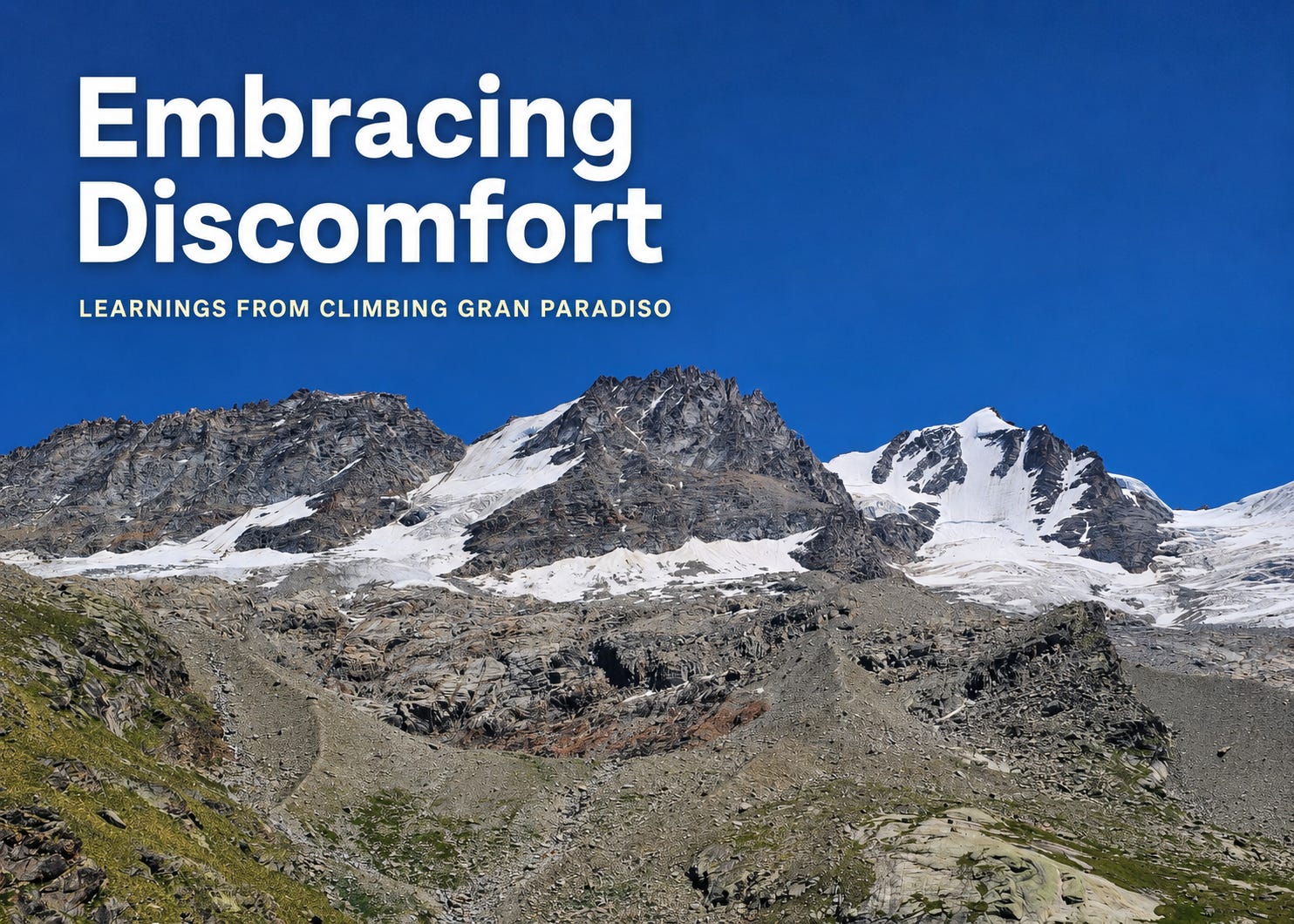
Learnings from Climbing Gran Paradiso

“Why do it if you know you won’t like it?”
A friend asked me this when I told them I was planning to climb two mountains that I knew would be well outside of my comfort zone.
Most people I encounter don’t seem to grasp why it’s important to sometimes experience extreme discomfort. A few, however, get where I’m coming from.
It’s useful to think of how we relate to physical activity in three ways. Firstly, there are activities we find relatively easy. Things like walking, kicking or batting a ball about, or having a light gym session. Obviously, what one person deems “easy”, someone else might find challenging. But engaging in exercise you enjoy and feel comfortable with a few times a week will be a boost for your wellbeing.
Next are activities that, despite being hard or challenging, we still enjoy. For me, this includes hard gym workouts and outdoor hikes. Others might enjoy long bike rides, martial arts or rock climbing. Even though most people don’t partake in activities at this level, pretty much everyone acknowledges that others glean enjoyment from them.
It’s the third perspective on how we can relate to physical activity that most folk find it hard to get their head around. This is when a task is so extreme that it’s highly unpleasurable – things like ultra-marathons and mountaineering, for example. While “adrenaline junkies” may achieve some sort of masochistic pleasure from these events – for these folk, their relationship to the task will be more akin to the second mindset – when exertion is intense and prolonged, for most of us, that will be an unpleasant experience.
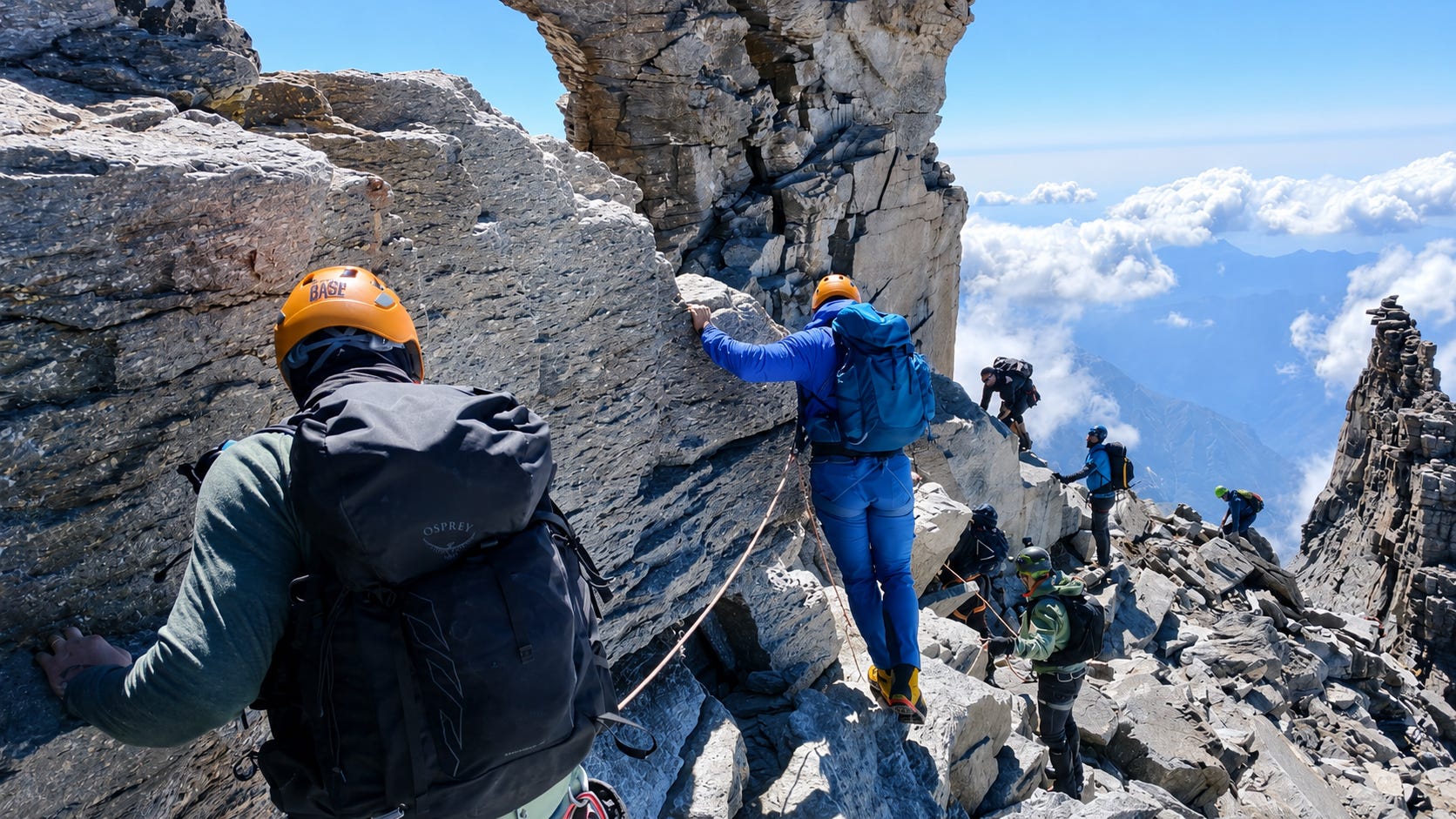
Summitting Gran Paradiso
A few years ago, I made a pledge to myself. When presented with an opportunity that was likely to be beneficial, I would have to find valid grounds to decline. Should I fail to find a good reason to say “no”, I had to commit. So, in October last year when my friend Oli suggested we attempt to climb Mont Blanc, it was one of those moments.
Mont Blanc, a mountain in the Alps and the highest peak in Western Europe, was advertised as requiring no prior experience. With manageable commitments for the next nine months, I had ample time to improve my fitness. In any case, the additional cardio and outdoor training would be hugely beneficial. So, with no reason to turn him down, I agreed to be Oli’s climbing buddy, and we booked the trip for July 2026. Prior to Mont Blanc, the itinerary mandated attempting another of the Alps. At 4,061m, Gran Paradiso is the highest peak solely in Italy. Regarded as “accessible”, it’s seen as a great first step for those aiming at Mont Blanc, and is described as “suitable for beginners”.
Our climbing party consisted of the guide, two other guys, Oli and myself. Climbing and descending Gran Paradiso spans three days. On day one, we set off from the car park at around 1,800m and climbed 2.5 hours to the Federico Chabod Hut at 2,712m. Here we were given the necessary training to familiarise ourselves with harnesses, crampons and different terrains: useful skills that will definitely help in the future. That night, in an unfamiliar environment of bunk beds and sweat, situated at high altitude, I struggled to sleep. My WHOOP indicated that I barely achieved 3.5 hours of broken shut-eye. After breakfast and kitting up, we continued our climb at 4.45am.
The trails and rocks transformed into ice and snow, at which point we put on our crampons and the guide roped the five of us together. For the first three hours of the climb, I was super-confident, but, as our ascent steepened, I started to struggle. With significantly reduced oxygen at altitude, I experienced fatigue like never before. Consequently, I found the final few hundred metres of snow climbing extremely hard. Thankfully, at the base of the summit section, we took off our crampons for the final ascent over rocks. Despite the sheer drop, I didn’t find this section particularly difficult or scary. Maybe this was because the lack of oxygen made me somewhat carefree. The view from the summit was magnificent, but with other climbers waiting, we had little time for photos, and, as I was disorientated, I didn’t get to fully appreciate it.
I assumed the descent would be easier. How wrong I was. As it warmed up, the snow began to thaw, which made walking much harder. To avoid sliding, we were instructed to slam our feet hard into the snow. But, as my quads felt more fatigued than ever before, I couldn’t slam with any impact.
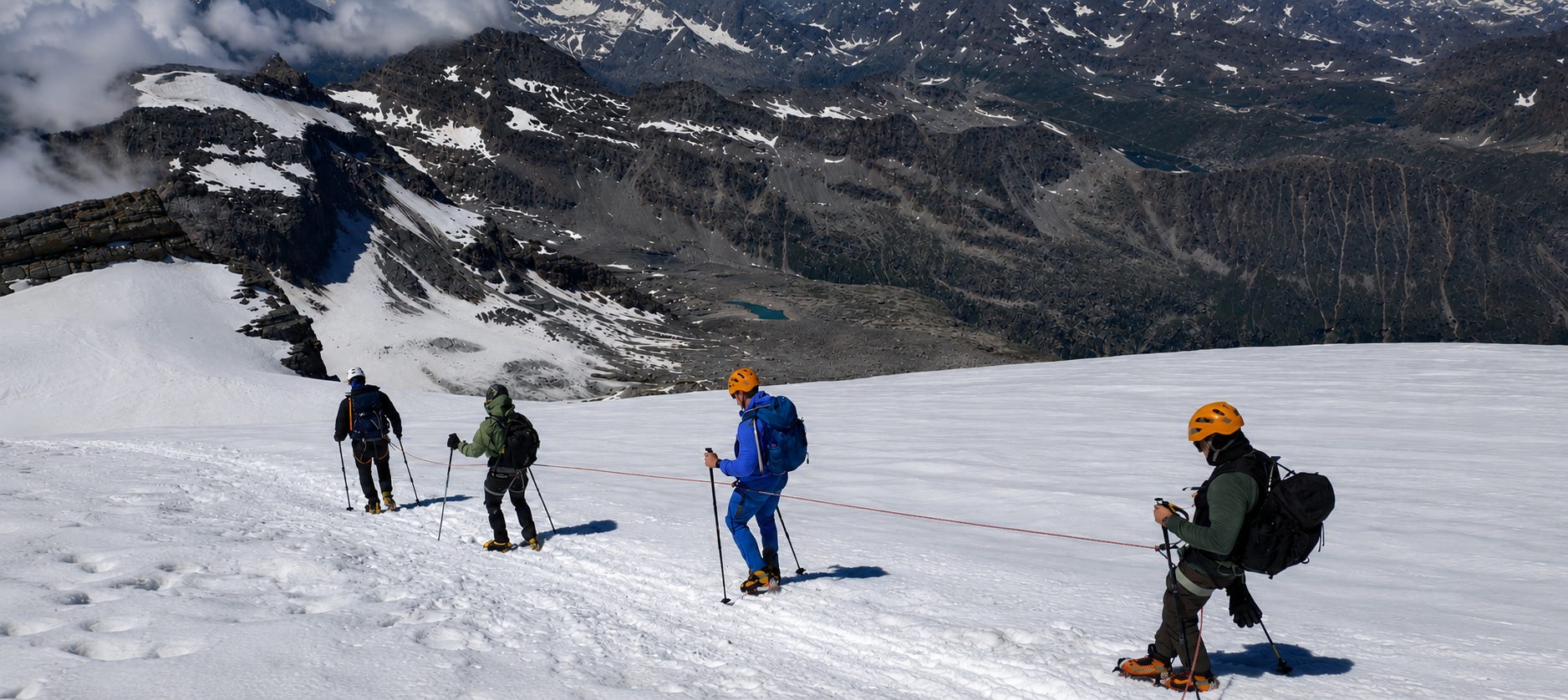
From the extreme tiredness and disorientation, I briefly passed out at one point and fell onto the ice, grazing my arm. The guide made me share the contents of my rucksack with the others. Despite being exhausted, I was incredibly uncomfortable with this: it reminded me of school sports when I was always one of the crap players. On reaching the rocky area, I started to find the descent less taxing, and eventually we arrived back at the hut, two hours later than expected.
After another night of crap sleep, the final leg back to the car park the next day took little more than 90 minutes.
Failure vs. Realism
As I struggled to cope with the altitude, attempting Mont Blanc was out of the question. My focus for the past nine months had been to summit the highest Alpine peak, so, naturally, I was hugely disappointed. While part of me felt like a failure, forever the realist, I accepted the decision.
At no point did I think I wasn’t going to reach Gran Paradiso’s summit, nor did I think I wouldn’t make it back to the hut. I would have, however, found it way less arduous had I been allowed brief stops to catch my breath and sip water. Not long: just a 20-30 seconds pause every 10 minutes or so. Frustratingly, the guide didn’t permit it, which may have been why I passed out. My body craved oxygen. Not allowing frequent pauses for just a few seconds seemed unnecessary to me, and my three co-climbers concurred.
Immense Privilege
I hated the experience. I spent seven hours in extreme discomfort. My relationship to the activity was the third perspective. Nevertheless, I look back on the experience with immense gratitude. What an absolute privilege it is to be able to summit Gran Paradiso. Not only do I have the time, financial means and support from my family, I’m in great health and fit enough to climb the Italian peak, despite physically struggling like never before. Not everyone has the means and ability to attempt these sorts of challenges. I’m lucky.
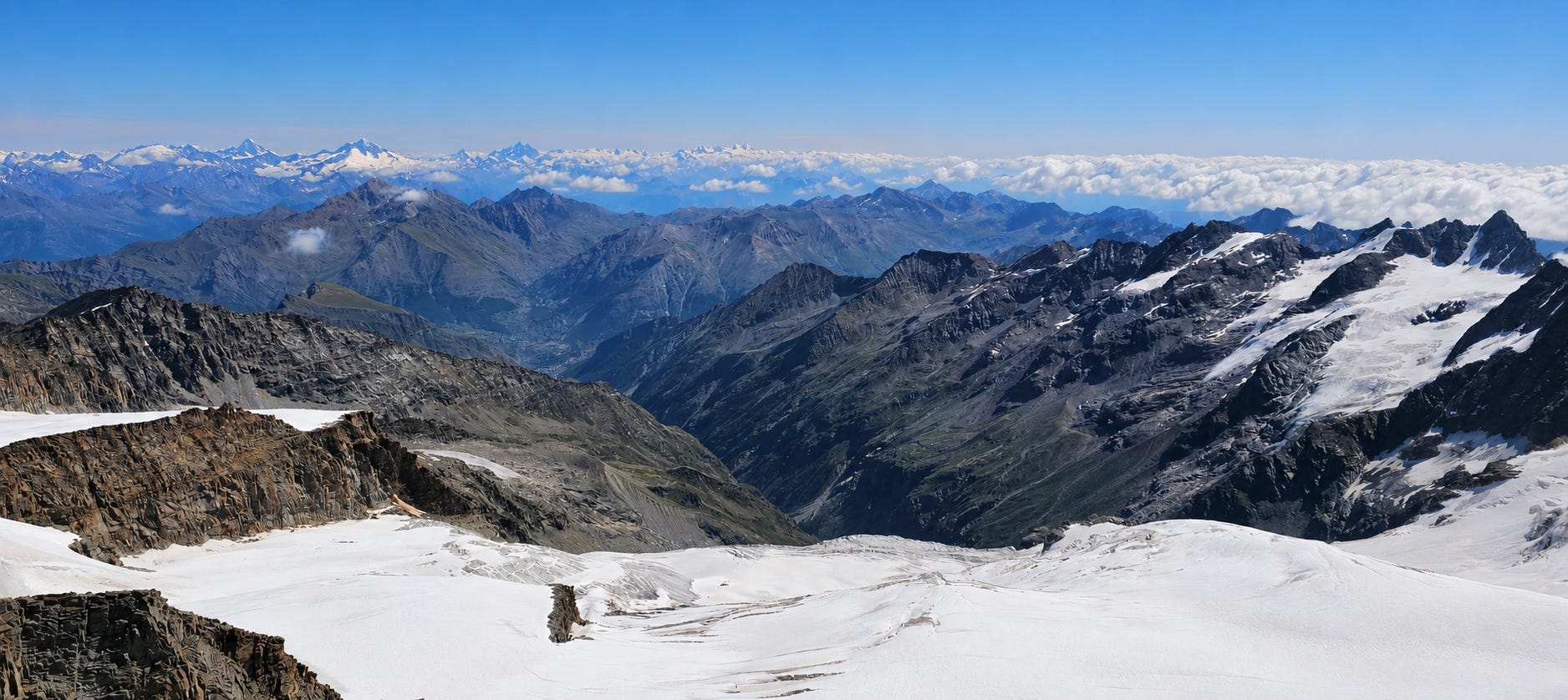
I don’t look back on the ordeal with much fondness. Yet, bizarrely, I’ve a yearning to experience that level of displeasure again. Maybe, as humans, we occasionally need to be reminded of where our limits lie: to push ourselves to see what we’re capable of. In a world of rapidly advancing technology, where the Law of Least Effort prevails, everything is too easy. Many of us hardly exercise at level one, let alone enjoy activities the second way. Encouraging people to do tasks they hate is well out of the question, especially as most can’t even grasp why we should.
In no way do I wish to appear elitist, showing off how tough I am. I’m anything but tough. But I do want to be tougher, and I do these things because I hope to build resilience. That is, of course, if resilience is something that can be built with volition. Experiencing discomfort the way I describe is, after all, personal choice. There’s a big difference between this and the extreme hardship that, sadly, too many people are forced to live through as a result of circumstances beyond their control.
I’ve intentionally undergone difficult tasks before, though never one as hard and sustained as when I climbed Gran Paradiso. While I enjoy hard exercise, what’s different here is my desire to return to the mindset I experienced when I was detesting every single footstep. Is that masochism? I don’t think so because pleasure is absent. Or is it? Maybe there’s pleasure in the memories that make me simultaneously shudder and yearn.
While pondering this paradox, I’ll be seeking my next uncomfortable task.
This is a mindset of a human 'warrior' post James.
Huge respect.
"Not only do I have the time, financial means and support from my family, I’m in great health and fit enough to climb the Italian peak, despite physically struggling like never before. Not everyone has the means and ability to attempt these sorts of challenges. I’m lucky." This recognition is most true...everyone has a Gran Paradiso at their age to scale and should take stock they are still here to climb.Thanks for reminding me!